


Charging at Home
Charge Your EV at Home is the Easiest Way to Stay Powered
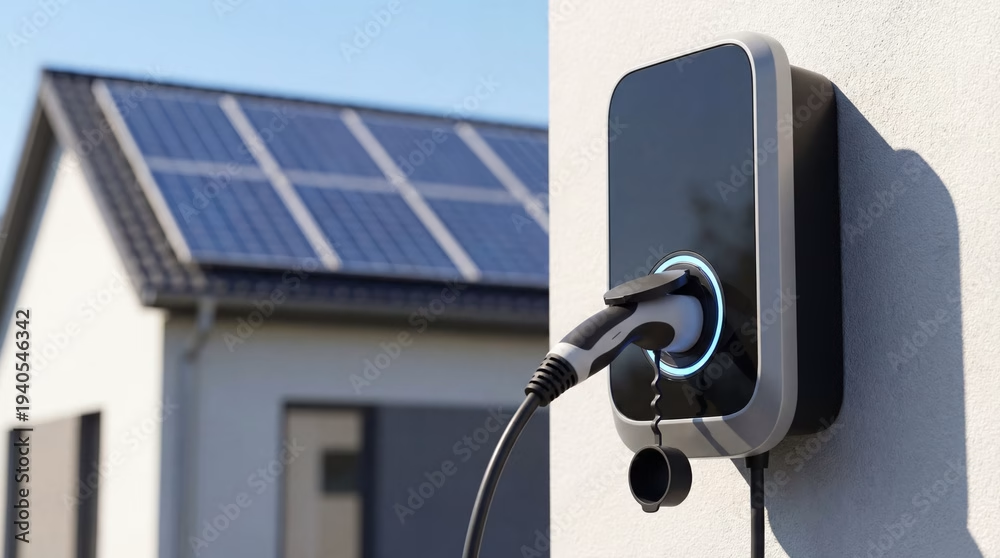
Most EV drivers do the majority of their charging at home overnight. Understanding your home charging options and the rebates available to help cover the cost makes the transition to electric driving more affordable and convenient.
Level 1 chargers are the simplest type and can be used with any standard household outlet, requiring no special installation. They are the slowest type of EV charger, typically taking about 8 to 12 hours to fully charge a hybrid and up to 24 hours for a fully electric vehicle, depending on battery size. This option is ideal if you plan to charge your vehicle overnight or if it sits for extended periods of time.
Level 2 chargers are faster than Level 1 chargers and require a 240-volt outlet, which might require professional installation. These chargers can usually fully charge an EV in about 4 to 6 hours. Because they work faster, they are perfect for quicker home charging and are often installed in garages. Level 2 chargers are the most practical choice for most EV owners who charge at home regularly.
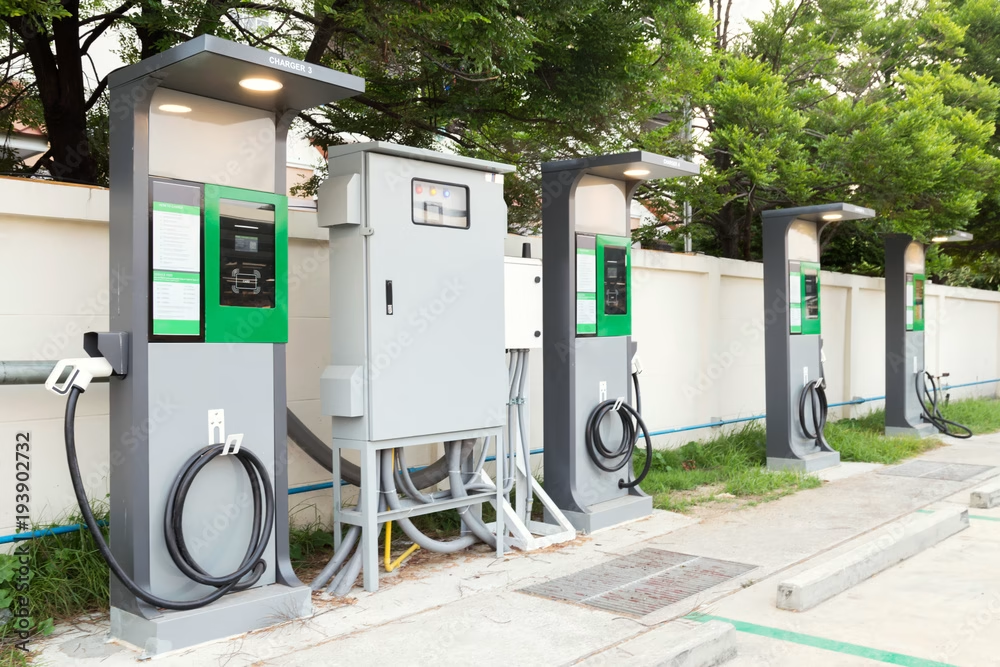
DC Fast Chargers are the fastest charging option, although they are not typically installed at homes due to their high power requirements and cost. They are often found at public charging stations, like those along highways or in commercial parking lots. They can charge an EV’s battery to about 80% in just 20 to 30 minutes.
Several Maryland utilities offer rebates for home EV charger installation. Individual Maryland utilities including Pepco, BGE, Delmarva, Potomac Edison, and SMECO offer rebates of up to $700 per person for EV charger installation. MCEC’s CEA Loan Program can also help cover the cost of home charger installation for eligible residents.
For longer trips or when home charging isn’t an option, Maryland has a growing network of public charging stations. MCEC’s Charging and Fueling Infrastructure program has funded 58 community EV charging sites across the state, with a focus on ensuring access in underserved communities. A public EV charging station map is available to help you find stations near you.
EV batteries are designed to last the expected lifespan of the vehicle. While EV batteries have a limited number of charging cycles, modern batteries are engineered to degrade slowly over time. Check with your EV dealer about battery life, warranty information, and what to expect from your specific vehicle’s battery performance over the long term.
Ready to Explore EV Incentives?
Maryland and federal programs can significantly reduce the upfront cost of going electric and installing a home charger.